It is easy to caricature history.
Cold War Europe is often painted in black and white—ideological hostility, armed checkpoints, suspicion at every border crossing.
But history is rarely that simple.
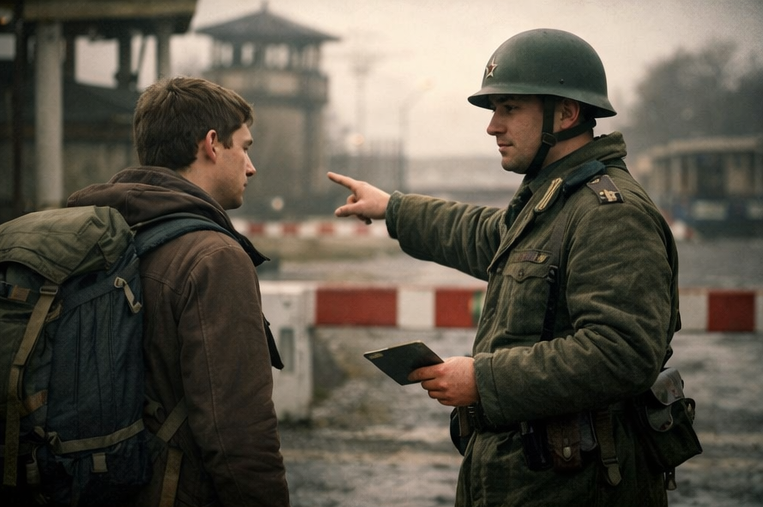
Picture a young American traveler in 1965 East Germany, carrying forbidden currency and naïve ambition. The clock is ticking. Midnight looms. The possibility of imprisonment feels real.
And then something unexpected happens.
Instead of cruelty, he encounters complexity. Instead of hostility, he receives guarded kindness. A border guard—stern, uniformed, part of the very system he fears—quietly bends rules, offers protection, and ultimately helps him find safe passage.
The moment is small. A cigarette shared in the shadows. A padded bench offered for sleep. A nod of approval that changes everything.
In political narratives, we talk about states and ideologies. But in lived reality, history turns on individuals.
Even within rigid systems, humanity finds cracks to breathe through.
The lesson is timeless: never underestimate the quiet decency of a single person acting within constraints.
Sometimes history’s most important gestures leave no official record